Know the Four C's
Before shopping, understand what you're paying for:
- Cut — How well the diamond is shaped. This is what makes it sparkle. Don't compromise on cut.
- Color — Ranges from D (colorless) to Z (yellowish). G-H offers great value — looks white to the naked eye.
- Clarity — Internal imperfections. VS1-VS2 is the sweet spot — flaws invisible without magnification.
- Carat — The size/weight. Bigger isn't always better — a well-cut 1-carat can outshine a poorly cut 2-carat.
Popular Ring Styles
- Solitaire — A single stone on a plain band. Timeless, classic, never goes out of style.
- Halo — A center stone surrounded by smaller diamonds. Makes the center stone look larger and adds sparkle.
- Three-stone — Represents past, present, and future. Meaningful and beautiful.
- Pavé band — Tiny diamonds set into the band itself. Extra sparkle from every angle.
- Vintage/Art Deco — Intricate detailing, milgrain edges, and unique geometry for the bride who loves antique charm.
- Oval or Pear — Elongated shapes that make fingers look longer and slimmer.
Metal Guide
- Platinum — Most durable, naturally white, hypoallergenic. Most expensive.
- White Gold — Similar look to platinum at a lower price. Needs occasional replating.
- Yellow Gold — Classic, warm, traditional. Popular in Arab and South Asian weddings.
- Rose Gold — Romantic pink hue. Trendy and unique.
Budget Tips
- Buy just under common sizes (0.9 instead of 1.0 carat) — significant savings, no visible difference.
- Consider lab-grown diamonds — same beauty, 30-50% less cost.
- Shop the setting separately from the stone for better deals.
- Don't forget the band budget — two bands (his + hers) add up.
Presenting the Ring
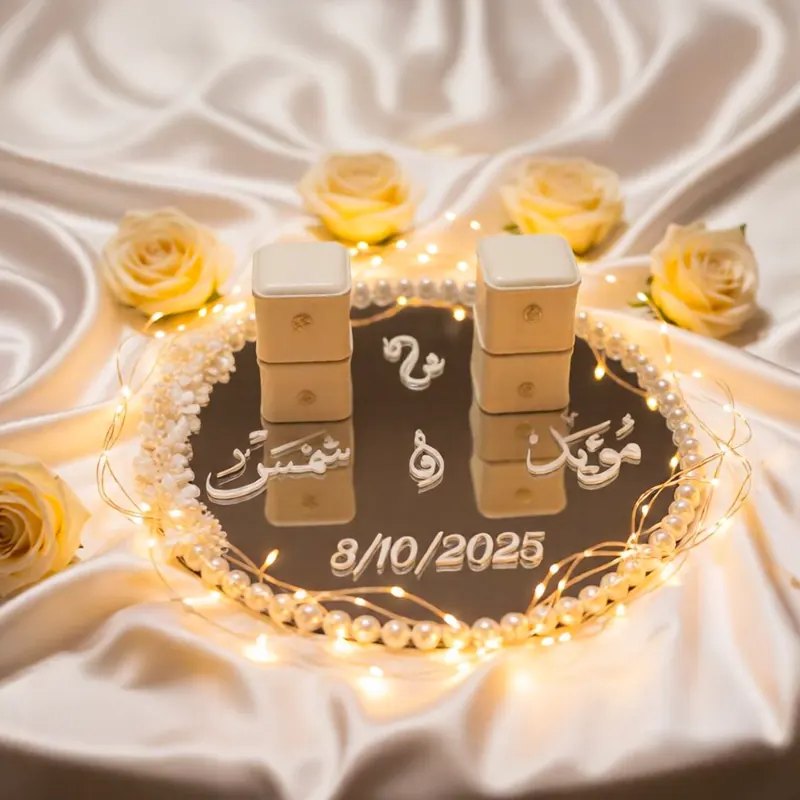
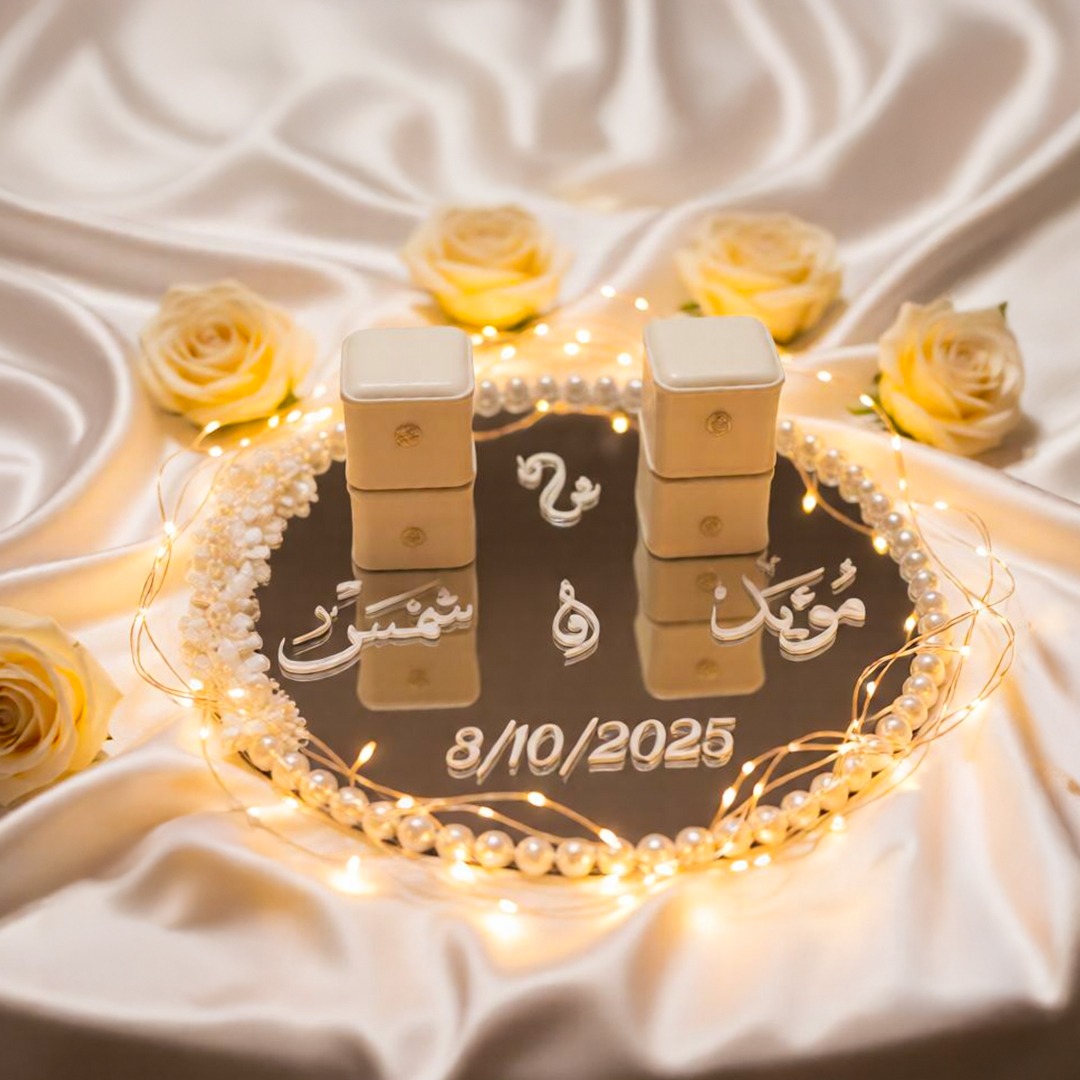
Once you have the perfect ring, it deserves a perfect presentation. A personalized ring display — whether it's a pearl mirror tray for an intimate moment or a hoop stand at the engagement party — elevates the proposal or ring exchange from nice to unforgettable.