
Understanding the Key Events
A Muslim wedding typically involves several celebrations, each with its own traditions and significance:
- Istikhara — The prayer for guidance before deciding on a marriage partner.
- Khitbah (Engagement) — The formal proposal and agreement between families. Often celebrated with a party where the shabka is presented.
- Katb Al-Kitab / Nikah — The Islamic marriage contract, the most sacred ceremony. This is where the rings are exchanged, the contract is signed, and the imam officiates.
- Walima (Reception) — The wedding celebration feast, hosted by the groom's family traditionally.
- Zaffa — The festive procession accompanying the bride and groom, often with drums, music, and dancing.
Planning the Nikah Ceremony
The nikah is the heart of the wedding. Here's what you need:
- Imam or officiant — To conduct the ceremony and recite the khutbah.
- Two witnesses — Required in Islamic law.
- Mahr (dowry) — A gift from groom to bride, agreed upon beforehand.
- Marriage contract — The document both parties sign.
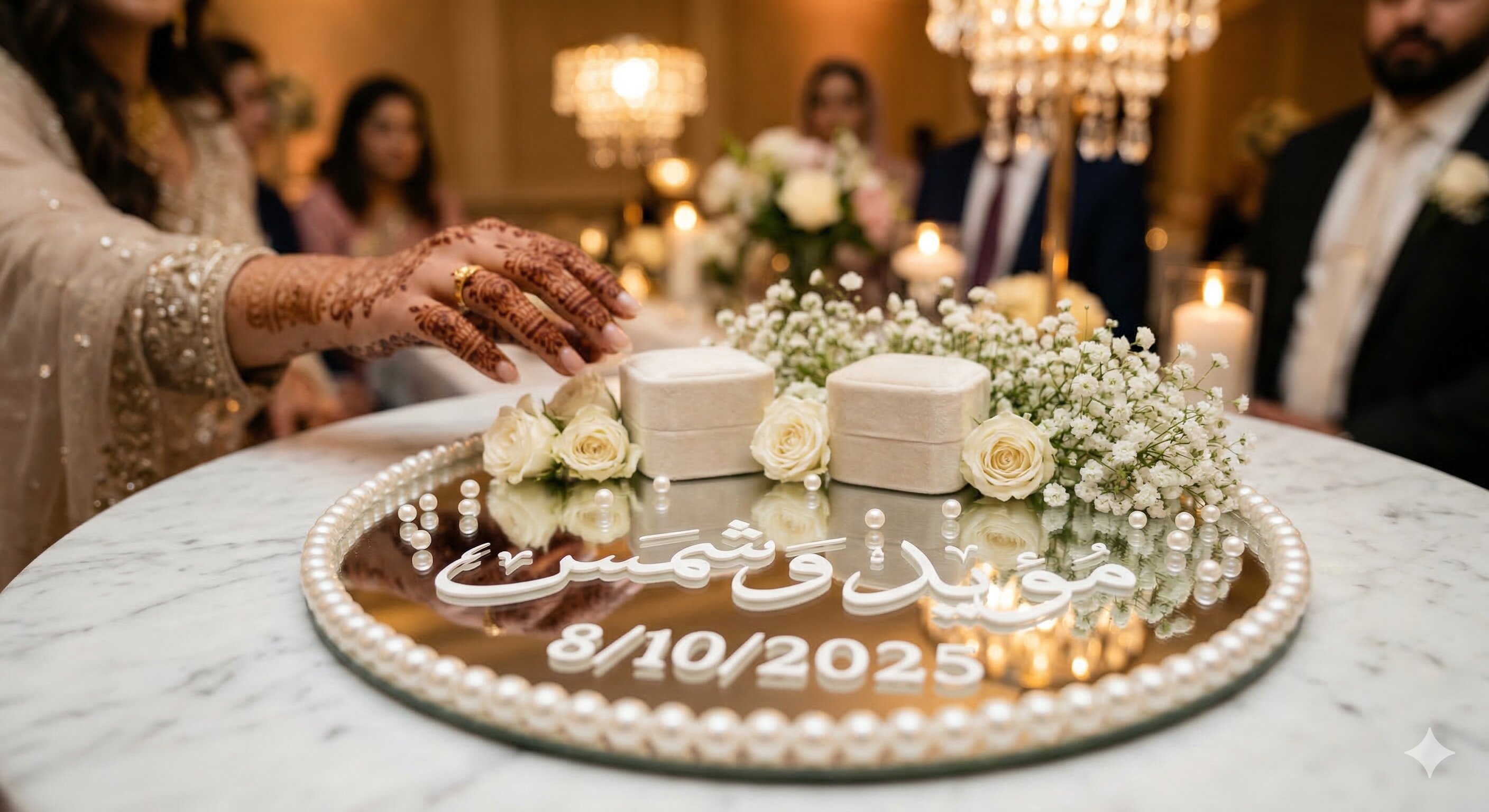
- Nikah tray — The ceremonial tray holding rings, scissors, and decorations.
- Quran — Often present during the ceremony.
Engagement Party Essentials
- Shabka presentation — The bridal jewelry set, displayed on a decorated platform or tray.
- Ring display — A personalized hoop stand or mirror tray for the ring exchange moment.
- Photography — Capture the moment the rings go on and the families celebrate together.
- Sweet treats — Dates, chocolates, traditional sweets for guests.
Etiquette Tips
- Many Muslim weddings have separate seating for men and women — plan your venue layout accordingly.
- Serve halal food and non-alcoholic beverages.
- Consider prayer time — if the wedding falls during prayer hours, provide a quiet space for guests.
- The bridal entry is a big moment — plan the timing and music carefully.
- Gift-giving is common — set up a gift table near the entrance.


