
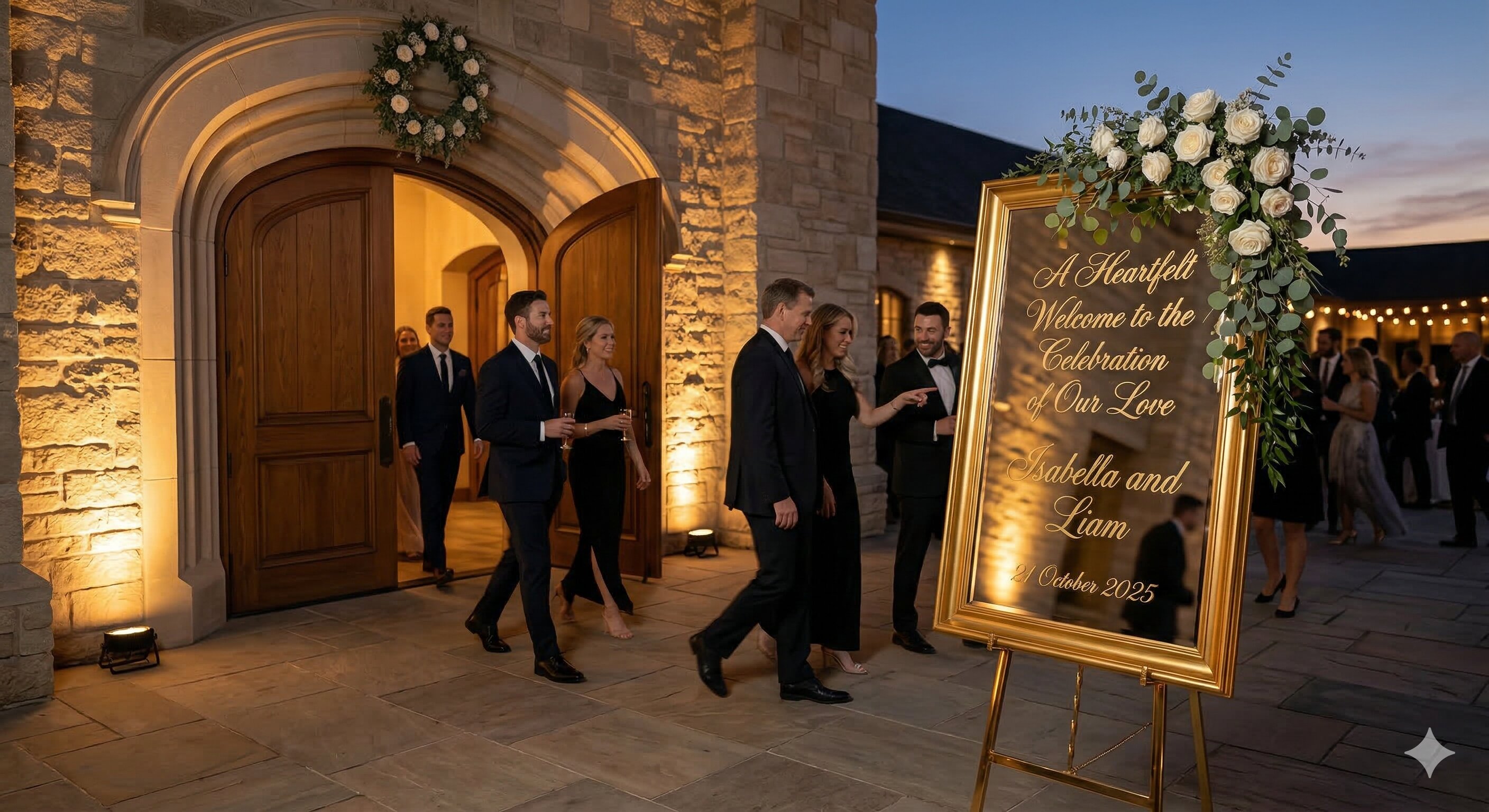
Decoding the Dress Code
Wedding invitations often come with dress code instructions that can be confusing. Here's what each one actually means:
Black Tie
Men: Tuxedo or dark formal suit, bow tie, dress shoes.
Women: Floor-length gown or very formal cocktail dress. Think gala.
Formal / Black Tie Optional
Men: Dark suit and tie (tux optional but appreciated).
Women: Long or midi dress, elegant jumpsuit, or dressy separates.
Semi-Formal / Cocktail
Men: Suit and tie or dress pants with a blazer.
Women: Cocktail dress, chic midi, or dressy blouse with skirt.
Smart Casual
Men: Dress pants or chinos with a button-down shirt. Blazer optional.
Women: Sundress, skirt and top, or elegant casual wear.
Tips for Arab/Muslim Wedding Guests
- Modesty matters — Many Muslim weddings appreciate modest attire. Longer sleeves, higher necklines, and below-knee hemlines are respectful choices.
- Hijab-friendly formalwear — Beautiful options exist! Flowing abayas with embroidery, modest maxi dresses with statement jewelry, or a tailored suit with a gorgeous silk hijab.
- Avoid white — That's the bride's color in most cultures.
- Comfortable shoes — Arab weddings involve a lot of dancing (dabke!). Bring a pair to change into.
- Bring a gift — Cash, gold, or household items are common wedding gifts.
- Be ready for photos — You'll be in lots of them!
Color Guide
Safe choices: Jewel tones (emerald, navy, burgundy, gold), pastels for daytime, and bold colors for evening.
Avoid: White, off-white, or anything that could upstage the bride. Also avoid overly casual fabrics like denim.


